
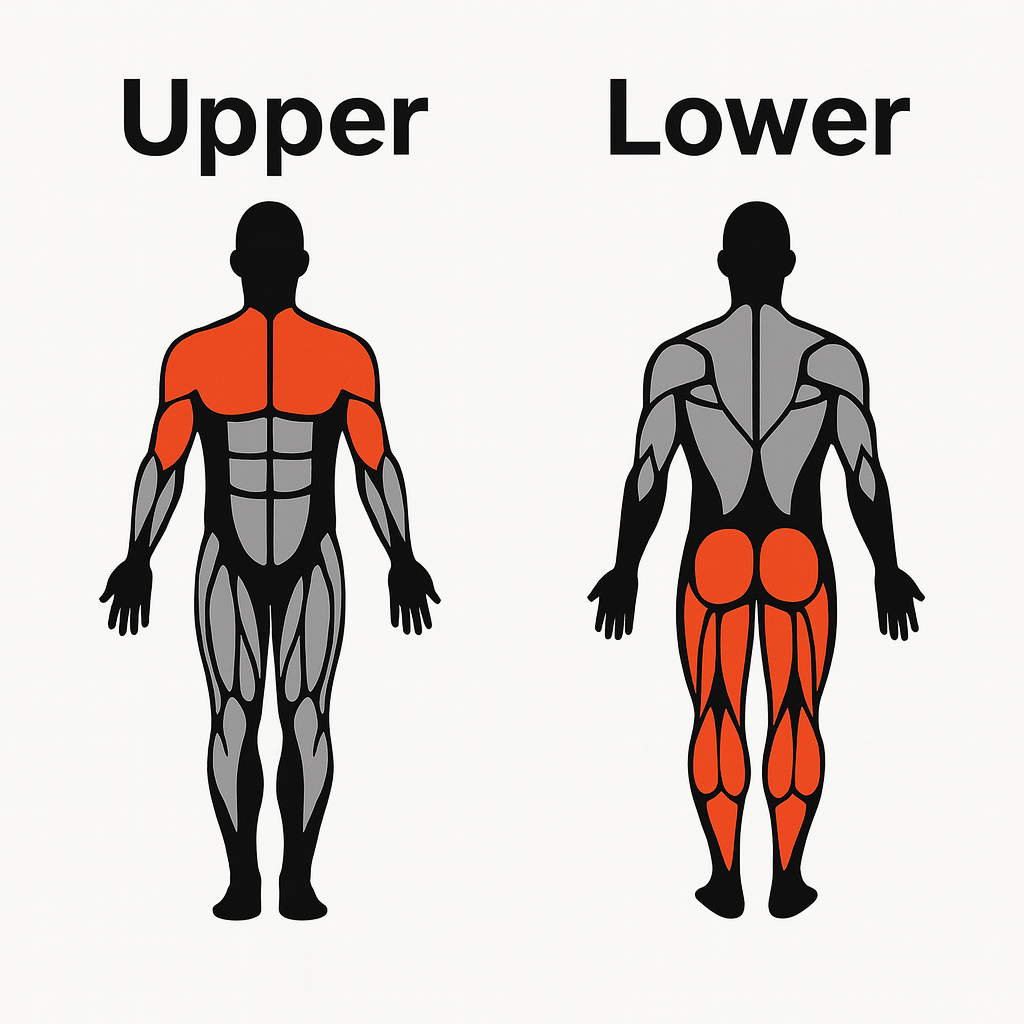
🏋️ The Ultimate Upper/Lower Split: Build Strength, Balance, and Longevity
Introduction: Why Structured Training Beats Random Workouts
Every lifter reaches a point where random workouts no longer deliver results. You can’t just “wing it” forever — not if you want real strength, symmetry, and longevity. That’s where structured training programs come in. Among all splits, the upper/lower split remains one of the most time-tested, effective, and sustainable training methods ever created.
This program divides your week into upper-body and lower-body sessions, balancing training volume and recovery in a simple, logical way. It’s popular among strength athletes, bodybuilders, and even beginners who want efficient progress without overtraining.
At Gymblioteka, we believe that building strength should be a lifelong pursuit — grounded in knowledge, discipline, and smart training design. Think of this split as your roadmap to continuous, intelligent improvement.
The Science Behind the Upper/Lower Split
The upper/lower split works because it aligns perfectly with the body’s recovery patterns. By separating training sessions into upper and lower muscle groups, you maximize focus, intensity, and recovery between sessions.
Here’s why it’s effective:
-
Optimal Frequency: Each muscle group is trained twice a week — enough to stimulate growth without exceeding recovery capacity.
-
Volume Control: You can manage sets and reps intelligently, avoiding burnout and joint strain.
-
Recovery Balance: Alternating between upper and lower sessions allows your body to rest while staying active.
-
Neuromuscular Focus: You can prioritize compound lifts and develop coordination between muscle groups.
When paired with proper nutrition, hydration, and recovery — plus the right gear — this approach leads to steady, sustainable growth.
The Upper Body Split: Structure and Focus
Your upper-body days should target the major pushing and pulling muscles — chest, back, shoulders, biceps, and triceps. A good upper session includes both compound and isolation movements to ensure balance between size and strength.
Example Upper Body Routine:
-
Bench Press – 4 sets x 6–8 reps
-
Pull-Ups / Lat Pulldowns – 4 sets x 8–10 reps
-
Overhead Press – 3 sets x 8 reps
-
Dumbbell Row – 3 sets x 10 reps
-
Triceps Dips – 3 sets x 12 reps
-
Bicep Curls – 3 sets x 12–15 reps
💡 Pro Tip: Use Gymblioteka’s padded training gloves to protect your hands and improve grip stability. Not only do they enhance comfort during pressing and pulling, but they also reduce wrist strain during high-volume sets.
For hydration, keep your Gymblioteka sports water bottle nearby — consistent water intake helps maintain muscle performance and prevent fatigue during long sessions.
The Lower Body Split: Building Power from the Ground Up
Leg day is the foundation of all physical development. Strong legs don’t just improve aesthetics — they enhance athletic performance, stability, and metabolic rate. The lower split trains your quads, hamstrings, glutes, and calves through a balance of heavy compound and controlled accessory work.
Example Lower Body Routine:
-
Squats – 4 sets x 6–8 reps
-
Romanian Deadlifts – 3 sets x 10 reps
-
Walking Lunges – 3 sets x 12 reps per leg
-
Leg Curls – 3 sets x 12 reps
-
Calf Raises – 3 sets x 15–20 reps
💡 Pro Tip: Incorporate Gymblioteka resistance bands for added tension during warmups or isolation work. Bands enhance joint activation, stabilize knees, and improve hip mobility before your heavy lifts.
And when training at home, the Gymblioteka sit-up assistant bar and push-up handles make your lower and core sessions more dynamic — perfect for athletes who value versatility.
Programming the Split
A traditional upper/lower program follows a four-day weekly schedule:
| Day | Focus |
|---|---|
| Monday | Upper Body |
| Tuesday | Lower Body |
| Wednesday | Rest |
| Thursday | Upper Body |
| Friday | Lower Body |
| Saturday | Active Recovery |
| Sunday | Rest |
If you’re newer to structured training, you can also start with three days per week, alternating sessions as needed.
Key Programming Tips:
-
Progressive Overload: Increase weights or reps weekly, even slightly.
-
Rest Between Sets: 60–120 seconds for hypertrophy, 2–4 minutes for heavy compound lifts.
-
Mobility Work: Include stretching or foam rolling post-session.
-
Nutrition: Aim for a small caloric surplus when building muscle.
-
Sleep: Recovery starts in the bedroom — aim for 7–9 hours per night.
Recovery and Adaptation
Recovery is where muscle growth actually happens. Training is the stimulus; rest is the reward. Without proper recovery, even the best program will fail.
Essential Recovery Factors:
-
Hydration: Dehydrated muscles lose strength faster — keep your Gymblioteka bottle full.
-
Nutrition: Prioritize protein and complex carbohydrates post-training.
-
Sleep: Deep sleep supports muscle repair and hormone balance.
-
Stretching & Mobility: Using resistance bands and gliding discs for active recovery helps prevent stiffness.
💡 Mindful Tip: Don’t rush progress. The best lifters view each session as part of a long-term process, not an instant transformation.
Train Anywhere: The Home Gym Advantage
Not everyone has access to a commercial gym — and that’s where Gymblioteka’s portable fitness equipment shines. You can build an effective upper/lower split anywhere with a few essential tools:
-
Resistance Bands: Add progressive overload without weights.
-
Push-Up Bars: Target the chest and triceps with reduced wrist strain.
-
Adjustable Pull-Up Bar: Transform any doorway into an upper-body training station.
-
Dips Bar: Train chest and triceps efficiently with minimal space.
Whether you’re in your living room, garage, or on the road, your fitness journey continues. A “library of strength” can exist anywhere — you just need the right tools and discipline.
Mindset and Longevity
Strength isn’t built overnight — it’s accumulated through years of focus, learning, and refinement. The upper/lower split isn’t just a program; it’s a framework for consistent growth.
At Gymblioteka, we emphasize training with purpose. Every lift, every rep, every drop of sweat contributes to both physical and mental fortitude. Our mission is to help you combine knowledge and effort — to train your body and sharpen your mind.
Conclusion
If your goal is sustainable progress, balanced physique development, and long-term health, the upper/lower split is one of the smartest ways to train. It teaches consistency, builds strength evenly, and fits perfectly into busy lifestyles.
Pair it with the right mindset — and the right equipment — and your results will speak for themselves.
Start today. Build your foundation, refine your movement, and join the thousands who make their home a place of strength and growth.
0 comments